Showing posts with label Parrots. Show all posts

Tuesday, 30 July 2013

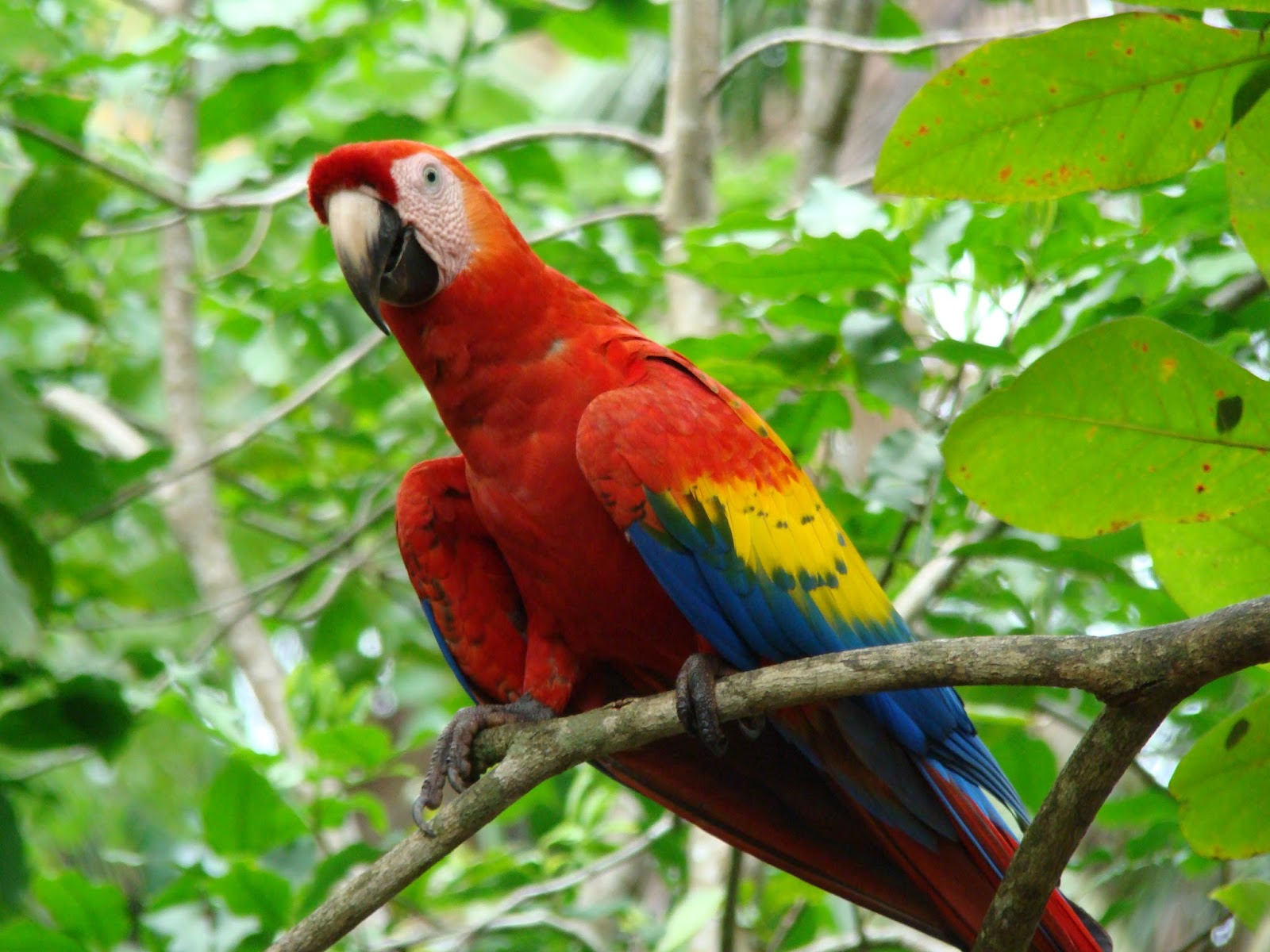
Scarlet Macaw

Scarlet Macaw is an extensive, red, yellow and blue South American parrot, a part of a substantial assembly of Neotropical parrots called macaws. It is local to moist evergreen woods of tropical South America. Go amplifies from compelling south-eastern Mexico to Amazonian Peru, Bolivia and Brazil in swamps up to 500 m (1,640 ft) (regardless once) up to 1,000 m (3,281 ft). It has experienced nearby eradication through natural surroundings demolition and catch for the parrot exchange, however generally it remains reasonably normal. 
One of 17 types of macaws, the Scarlet Macaw is a standout amongst the most delightful parts of the parrot family and one of the biggest Neotropical parrots. Red macaws favor life in the rainforest. With wide solid wings and empty bones that support flight, they can achieve speeds of 56 kilometers (35 miles) for every hour. The red macaw has an in number, bended bill to break hard nuts and seeds, and a tongue that can clutch the portion to force it from the shell. They consume dirt from riverbanks, however not a single person is certain why. Guys and females both appear to be identical. 
Scarlet Macaw mate for life. The hen lays a few white eggs in a tree pit. The female hatches the eggs for around the range of five weeks, and the chicks fledge from the home in the vicinity of 90 days in the wake of incubating. also leave their guardians in the ballpark of a year later. Adolescents arrive at sexual development at five years of age. 


Friday, 14 June 2013

Rainbow Lorikeet | Australia Beautiful Bird

Rainbow Lorikeet is a types of Australasian parrot discovered in Australia, eastern Indonesia (Maluku and Western New Guinea), Papua New Guinea, New Caledonia, Solomon Islands and Vanuatu. In Australia, it is normal along the eastern seaboard, from Queensland to South Australia and northwest Tasmania. Its territory is rainforest, waterfront hedge and woodland regions. Numerous taxa generally recorded as subspecies of the Rainbow Lorikeet are more and more treated as differentiate species. 

A Rainbow Lorikeet is a moderate size parrot that is full of rainbow shades. Male and female lorikeets seem to be comparative. The head is a shade of profound blue. The left and right upper sides are profound green. The paunch is for the most part profound green. The thighs and the hindquarters are united in yellow and profound green. Rainbow Lorikeets are scarcely recognizable in sexual orientations. The midsection is bursting red with strokes of blue and dark. These winged animals are 25 to 30 centimeters in length. The wing compass is of 17 centimeters. Normal weight of rainbow lorikeets goes from 75 to 157 grams. 
The Rainbow Lorikeet chiefly rummages on the blooms of bushes or trees to collect nectar and dust, and yet consumes soil grown foods, seeds and a few creepy crawlies. The eggs of the Rainbow Lorikeet are laid on bitten, rotted wood, ordinarily in an empty appendage of an eucalypt tree. Both genders get ready the home hole and sustain the junior, yet just the female hatches the eggs. 
Rainbow Lorikeets regularly voyage together in sets and incidentally react to calls to fly as a group, then scatter again into sets. Rainbow Lorikeet sets guard their bolstering and settling ranges combatively against other Rainbow Lorikeets and other winged creature species. They pursue off not just more diminutive fledglings, for example the Noisy Miner, and yet bigger and more effective winged animals, for example the Australian Magpie. 
Rainbow Lorikeets sustain chiefly on soil grown foods, dust and nectar, and control a tongue adjusts particularly for their specific eating methodology. The close of the tongue is provided with a papillate extremity adjusts to assembling dust and nectar from blossoms. Nectar from eucalyptus is essential in Australia, other vital nectar sources are Pittosporum, Grevillea, Spathodea campanulata (African Tulip-tree), and sago palm. In Melanesia coconuts are extremely significant sustenance sources, and Rainbow Lorikeets are significant pollinators of these. 
 Rainbow Lorikeet
 Beautiful Rainbow Lorikeet
 Two Lovely Rainbow Lorikeets
The Rainbow Lorikeet
Related Posts Plugin for WordPress, Blogger...